Red Butte: BrightNight Becomes the Data-Center Developer on Its Own 1.5 GW Utah Site


Key takeaways
- BrightNight Power is building Red Butte, a single Iron County development that pairs a 1.5 GW AI data center with four of its own power plants, evolving from the site's previously permitted Antelope Springs Solar.
- The data center is planned as 10 buildings of 150 MW each (1.5 GW total, ~6.6 million sq ft), with a campus cost of roughly $30.75 billion.
- The four on-site plants are a 1.5 GW natural gas plant, a 1.5 GW / 6.6 GWh gas-charged firming battery (two 750 MW / 3.3 GWh phases), 300 MW of solar, and a 300 MW / 1.2 GWh battery.
- All four plants and the data center share a single PacifiCorp grid interconnection, so the site is grid-connected rather than islanded.
- BrightNight filed the application on May 4, 2026; it was deemed incomplete on May 22 and is on hold under a 180-day Iron County moratorium. Aterio estimates phased activation from Q1 2029 through Q2 2031.
Aterio datasets
See the data behind the story
The records behind this article live in the US Data Center Locations and Power Demand dataset.
In 2023, BrightNight Power won approval to build a solar farm on a stretch of Iron County, Utah. It is now layering something far larger onto the same site: Red Butte, a 1.5 GW AI data center wrapped in four of its own power plants, a 1.5 GW gas plant, a 1.5 GW gas-charged firming battery, 300 MW of solar, and a 300 MW battery. The renewable power developer is not supplying a data center here; it is building the data center itself. That makes Red Butte one of the clearest signs yet of power producers crossing from selling electrons to building the compute that consumes them.
Aterio surfaced Red Butte the way it surfaces most projects before mainstream coverage: from the Iron County application, utility filings, and satellite imagery. It tracks the project at the facility level: the data center campus by individual building activation, and each generation asset across its own energization phases.
From a permitted solar project to an AI campus
BrightNight secured approval in 2023 for the Antelope Springs Solar Project on this land. That solar plant, 300 MW of solar paired with a 300 MW / 1.2 GWh battery, is now one piece of a single, far larger development: the Red Butte Data Center and Natural Gas Facilities Project. Onto the same site BrightNight is adding a 1.5 GW AI data center, a 1.5 GW gas plant, and a 1.5 GW gas-charged firming battery, four power plants and the compute they feed, all sharing one PacifiCorp interconnection. (It should not be confused with the unrelated Antelope Data Campus elsewhere in the county.)
The layering is the story: a developer that already held a permitted site, an interconnection position, and local relationships used that footing to add the highest-value demand on the grid (AI compute) and to build dedicated power for it. That is a faster path to a powered campus than raw land, and one only a power developer can take.

Figure: The Red Butte site map, with the data center site and its co-located gas and BESS blocks inside the project boundary, off Antelope Springs Road in Iron County, UT. (KOP markers are the application's visual-assessment viewpoints.) Source: Red Butte Data Center and Natural Gas Facilities Project application.
What's being built
The Red Butte application describes a single campus combining a hyperscale-class data center with utility-scale generation and storage.
Key project parameters:
- Data center: 10 buildings, 150 MW each, 1.5 GW total, ~6.6 million sq ft
- Natural gas plant: ~1.5 GW, simple-cycle peaker (two 750 MW phases)
- Gas-charged battery (BESS): 1.5 GW / 6.6 GWh in two 750 MW / 3.3 GWh phases, charged by the on-site gas plant and discharged on demand to firm the load
- Solar: 300 MW (originally permitted as Antelope Springs Solar)
- Solar-paired battery (BESS): 300 MW / 1.2 GWh
- Grid interconnection: one shared PacifiCorp interconnection for the whole project
- Campus cost: ~$30.75 billion
- Developer / design team / EPC: BrightNight Power, with Gensler and AlfaTech on design and Tetra Tech on civil/permitting; the data-center end user is not disclosed
- Location: Newcastle, Iron County, Utah (37.78523, -113.49757)
Source: Red Butte Data Center and NG Project application (Iron County) and Aterio dataset.
Together the four plants make Red Butte a self-contained power campus: the gas plant and its gas-charged firming battery carry the data-center load, while the 300 MW solar plant and its 300 MW / 1.2 GWh battery, the part originally permitted as Antelope Springs Solar, add lower-cost daytime energy. BrightNight's public materials describe the site as an "over 2 GW" hybrid; this post breaks out the individual plants.

Figure: The Red Butte site plan lays out ten data center buildings across two phases, each paired with on-site switchgear/substation power-plant blocks, equipment yards, and retention ponds. Source: Red Butte 1.5 GW Data Center and Natural Gas Project site plan (Appendix A).
The point is the pairing: a 1.5 GW on-site gas plant behind a 1.5 GW load, with a 1.5 GW / 6.6 GWh battery (two 750 MW / 3.3 GWh phases) that charges off that gas generation and re-dispatches it to firm output through ramps and outages. The battery adds no new firm generation of its own, but coupling it almost one-to-one with the plant and the load is what lets a single developer guarantee round-the-clock supply without waiting on the grid.
A grid-tied hybrid, not an island
Red Butte is designed to power its data halls primarily from the on-site gas plant, with the 1.5 GW / 6.6 GWh firming battery charging off that generation and re-dispatching it on demand, rather than waiting years for transmission upgrades to deliver grid power. The site is not islanded, though: the whole project shares a single PacifiCorp interconnection, and the solar plant already sits in PacifiCorp's queue, so a grid tie is in the works alongside the on-site generation.
Co-locating generation lets a developer sidestep the multi-year interconnection wait that now gates most large loads, while the grid tie preserves the ability to import and export power. It is the same logic pushing AI campuses toward on-site generation nationwide, applied here by the power developer itself. For a prospective tenant, that means siting certainty: firm power matched to the load from day one, without queuing for transmission.
Power producers are becoming data-center developers
Red Butte fits a broader shift Aterio has tracked across the buildout: a steady move from supply to develop to own. Data-center operators first contracted with power companies for dedicated supply, the kind of power-plus-compute pairing seen as former bitcoin miners pivoted their power assets into AI hosting. Red Butte is the next rung: the power developer building and owning the data center itself, on a site and an interconnection position it already holds.
BrightNight is well-suited to it. A renewables-focused independent power producer with a multi-gigawatt pipeline and infrastructure-investor backing, it already builds firm, integrated power systems, and at Red Butte it is wrapping four of them around its own data center. It reflects the reality behind the headline numbers in the wider U.S. hyperscaler buildout: much of the new pipeline is being shaped by who can deliver power, not just who can fill buildings.
Timeline and status
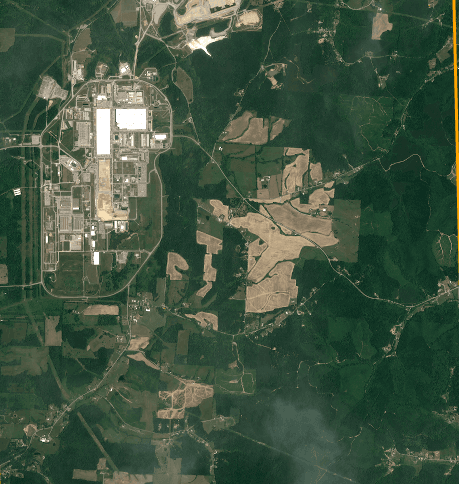
BrightNight submitted the Red Butte application to Iron County on May 4, 2026. The county deemed it incomplete on May 22 and, on May 26, imposed a 180-day moratorium on new data-center applications, leaving Red Butte on hold until the moratorium ends. The project is at announcement stage with no construction on the ground. Satellite imagery as of June 8, 2026 shows the parcel still undeveloped.
Aterio's estimated activation schedule has the campus coming online one building per quarter, from Q1 2029 through Q2 2031, a phased ramp that lets early data halls energize while later buildings are still under construction.
Bottom line
Red Butte marks where the AI buildout is heading: power developers are moving from supply to develop to own, repurposing their own permitted sites into integrated compute-and-power campuses. For investors, it signals a new class of developer entering the market with a structural edge in the scarcest input, power; for energy and site-selection analysts, it is four power plants, 1.5 GW of gas, a 1.5 GW gas-charged battery, 300 MW of solar, and a 300 MW battery, wrapped around a 1.5 GW load on one Utah site and one interconnection. The near-term questions: whether Iron County's moratorium clears, and who the undisclosed tenant turns out to be.
Frequently asked questions
What is the Red Butte data center project in Utah?
Red Butte is BrightNight Power's planned development in Newcastle, Iron County, Utah, pairing a 1.5 GW AI data center with four of the developer's own power plants on one site. The data center is planned as 10 buildings of 150 MW each, roughly 6.6 million square feet, at a campus cost of about $30.75 billion. The project evolved from the site's previously permitted Antelope Springs Solar, and the data-center end user is not disclosed.
How will the Red Butte data center be powered?
Red Butte's 1.5 GW load is matched by four on-site plants: a 1.5 GW simple-cycle natural gas plant, a 1.5 GW / 6.6 GWh gas-charged firming battery in two 750 MW / 3.3 GWh phases, 300 MW of solar, and a 300 MW / 1.2 GWh solar-paired battery. All four plants and the data center share a single PacifiCorp grid interconnection, so the site is grid-connected rather than islanded.
Has the Red Butte data center been approved?
No. BrightNight filed the Red Butte application with Iron County on May 4, 2026; the county deemed it incomplete on May 22 and imposed a 180-day moratorium on new data-center applications on May 26, leaving the project on hold. Red Butte is at announcement stage with no construction on the ground, and satellite imagery as of June 8, 2026 shows the parcel still undeveloped.
When will the Red Butte data center come online?
Aterio's estimated activation schedule has the Red Butte campus coming online one building per quarter, from Q1 2029 through Q2 2031, a phased ramp that lets early data halls energize while later buildings are still under construction. The schedule depends on Iron County's 180-day moratorium clearing and the application being completed and approved.
Aterio tracks Red Butte and U.S. data center projects in real-time, from early filings and rezoning actions to confirmed construction starts and the power projects behind them.
Download the latest Data Center Report or schedule a call to explore how emerging campuses like Red Butte fit into the broader AI infrastructure buildout.